Shift-Left Testing: How to Find Bugs Before They Reach Production
 By Jenkins A F
| September 10, 2026
By Jenkins A F
| September 10, 2026
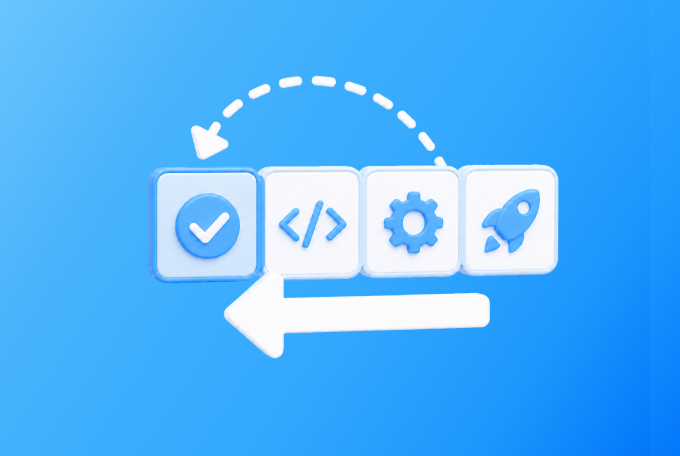
In modern software development, releasing software quickly is important but releasing software with fewer defects is even more important. As development teams adopt Agile, DevOps, and continuous delivery practices, traditional testing approaches are no longer enough.
One common problem is discovering defects late in the development lifecycle. A bug found during production can result in customer complaints, failed transactions, security risks, downtime, and expensive fixes.
This is where Shift-Left Testing comes in.
Shift-left testing is an approach that moves testing activities earlier in the software development lifecycle. Instead of waiting until development is complete to start testing, developers, testers, and other stakeholders work together to identify and prevent defects from the beginning.
What Is Shift-Left Testing?
The term “shift-left” comes from the traditional Software Development Life Cycle (SDLC), where development happens on the left and testing and deployment happen toward the right.
A traditional approach might look like this:
Requirements → Design → Development → Testing → Deployment → Production
In this model, significant testing may happen after most of the development work has already been completed.
Shift-left testing changes the approach:
Requirements → Testing → Design → Testing → Development → Testing → CI/CD → Production
Testing becomes a continuous activity rather than a final phase.
For example, testers can review requirements before development begins, developers can write unit tests while implementing functionality, and automated security and integration tests can run as part of the CI/CD pipeline.
The objective isn’t simply to “test earlier.” It is to introduce quality checks and feedback as early and continuously as practical.
Why Is Shift-Left Testing Important?
The later a defect is discovered, the more effort may be required to understand, fix, retest, and deploy the change.
Consider a simple requirement:
A customer should not be able to purchase more products than are currently available in inventory.
If this requirement is misunderstood during development, the resulting defect could pass through multiple stages and eventually reach production.
Finding the issue during a requirements review might take minutes to correct.
Finding it after deployment could involve:
- Investigating customer reports
- Reproducing the issue
- Identifying the faulty service or component
- Developing a fix
- Running regression tests
- Deploying the fix
- Communicating with affected customers
Shift-left testing helps reduce this risk by providing feedback earlier.
Key benefits include:
- Earlier defect detection: Problems can be identified before they become expensive production issues.
- Faster feedback: Developers receive test results closer to the time they introduce a change.
- Lower cost of fixing defects: Small issues are generally easier to address before they spread across the system.
- Better software quality: Quality becomes part of the development process rather than a final checkpoint.
- Faster releases: Automated testing can provide rapid feedback in CI/CD pipelines.
- Reduced production risk: Critical functionality can be continuously validated before release.
How Does Shift-Left Testing Work?
Shift-left testing involves introducing appropriate quality activities throughout the development lifecycle.
1. Requirements Testing
Testing can begin before a single line of code is written.
QA engineers, developers, business analysts, and product owners can review requirements to identify ambiguity, missing scenarios, and conflicting business rules.
For example:
Requirement:
“Users can cancel an order.”
This sounds simple, but several questions immediately arise:
- Can users cancel an order after payment?
- Can they cancel after shipment?
- Is cancellation available for every product?
- What happens to the payment?
- Is the inventory restored?
- What notification does the customer receive?
Identifying these questions early can prevent defects later.
2. Design Reviews
Testing considerations should also be included during system and architecture design.
Teams can ask:
- Is the design testable?
- Are components loosely coupled?
- Can services be tested independently?
- How will failures be handled?
- What happens when an external service is unavailable?
- Are security risks being addressed?
Finding design problems early can prevent expensive architectural changes later.
3. Unit Testing
Unit tests validate individual functions, methods, or components.
For example, an inventory service might contain logic that checks whether the requested quantity is available.
A unit test could verify:
Available inventory = 10
Requested quantity = 5
Expected result = Order allowed
Another test could verify:
Available inventory = 10
Requested quantity = 15
Expected result = Order rejected
These tests are typically fast and can run whenever code changes.
4. API Testing
Modern applications often rely heavily on APIs and microservices.
API testing allows teams to validate business logic and service interactions without depending entirely on the user interface.
For an order API, tests might verify:
- Valid order creation
- Invalid product IDs
- Insufficient inventory
- Authentication failures
- Invalid request data
- Duplicate requests
- Appropriate HTTP status codes
- Correct response payloads
API tests can provide faster feedback than relying solely on end-to-end UI tests.
5. Integration Testing
Individual components may work correctly but still fail when integrated.
Suppose an e-commerce application contains:
Order Service → Inventory Service → Payment Service → Notification Service
Each service may pass its individual tests.
But what happens when the order service sends an unexpected response to the inventory service?
Integration testing helps identify these problems.
It validates whether multiple components work together as expected.
6. Security Testing
Security should also move earlier in the development lifecycle.
Instead of waiting for a security assessment near release time, teams can integrate security checks into development and CI/CD workflows.
Examples include:
- Static application security testing (SAST)
- Dependency vulnerability scanning
- Secrets detection
- API security testing
- Authentication and authorization testing
This approach is sometimes described as DevSecOps, where security becomes part of the development and delivery process.
7. Automated Testing in CI/CD
One of the biggest enablers of shift-left testing is automation.
A typical CI/CD pipeline might look like:
Developer commits code
↓
Build
↓
Static analysis
↓
Unit tests
↓
API tests
↓
Integration tests
↓
Security checks
↓
Deployment
↓
Automated validation
If a critical test fails, the pipeline can prevent the change from progressing until the issue is investigated.
This creates a quality gate between development and deployment.
A Practical Example: Finding an E-Commerce Bug Early
Let’s take a common e-commerce scenario.
Requirement
“A customer cannot purchase more products than are available in inventory.”
Potential defect
A developer accidentally implements:
if requested_quantity <= inventory
allow_order
but the inventory value is not updated correctly after a successful purchase.
This could result in multiple customers purchasing the same inventory.
How shift-left testing can catch it
Requirement stage:
The team identifies that inventory must be updated atomically and that concurrent purchases need to be considered.
Unit testing:
Developers verify inventory validation and update logic.
API testing:
The team verifies that order requests correctly interact with the inventory API.
Integration testing:
The order and inventory services are tested together.
Performance/concurrency testing:
Multiple simultaneous purchase requests are used to identify race conditions.
CI/CD:
These automated tests run whenever relevant code is committed.
Production:
Monitoring and alerts continue to detect unexpected inventory behavior.
Instead of discovering the issue through an angry customer who receives an out-of-stock order, the development team has multiple opportunities to catch it earlier.
Shift-Left Testing Does Not Mean “Automate Everything”
A common misunderstanding is that shift-left testing means creating as many automated tests as possible.
That’s not the goal.
Automation is valuable, but teams should automate tests that provide reliable and repeatable feedback.
For example:
Good candidates for automation:
- Unit tests
- API tests
- Regression tests
- Repetitive validation
- Security scans
- Data-driven tests
Activities that may still benefit from human testing:
- Exploratory testing
- Usability evaluation
- Complex business workflows
- Visual assessment
- Investigating unexpected behavior
The best strategy combines automation with human expertise.
Common Challenges With Shift-Left Testing
Although shift-left testing provides significant benefits, implementing it isn’t always easy.
Developers and testers work in isolation
If developers finish coding before involving QA, many opportunities for early feedback are lost.
The solution is collaboration from the beginning.
Too many slow automated tests
A large test suite that takes hours to execute can become a bottleneck.
Teams should prioritize fast, reliable tests and organize tests according to risk and purpose.
Flaky tests
Tests that randomly pass and fail without code changes reduce trust in automation.
Flaky tests should be investigated and fixed rather than ignored.
Poorly defined requirements
Automation cannot compensate for ambiguous requirements.
The earlier the team clarifies expected behavior, the easier it becomes to create meaningful tests.
Treating QA as the only owner of quality
Shift-left testing works best when quality is a shared responsibility.
Developers, testers, product owners, architects, and operations teams all contribute to software quality.
Best Practices for Implementing Shift-Left Testing
Organizations don’t need to transform their entire testing strategy overnight.
A practical approach is to start small.
Start testing requirements early
Ask testers and developers to participate in requirement discussions and identify missing scenarios before implementation begins.
Build a strong unit-test foundation
Encourage developers to test business logic close to the code.
Prioritize API and integration testing
For applications built around services and APIs, these tests can provide valuable coverage without relying exclusively on UI automation.
Integrate tests into CI/CD
Run appropriate automated tests automatically when code changes are committed.
Focus on risk
Not every feature requires the same level of testing.
Prioritize functionality involving:
- Payments
- Authentication
- Customer data
- Financial transactions
- Critical business workflows
- High-volume operations
Monitor production
Shift-left does not mean testing stops after deployment.
Production monitoring, logging, alerting, and feedback provide another layer of quality assurance.
The broader principle is:
Test early → Test continuously → Monitor continuously
Shift-Left vs. Traditional Testing
The difference can be summarized simply:
| Traditional approach | Shift-left approach |
| Testing primarily after development | Testing throughout development |
| QA is heavily involved near release | QA collaborates from the beginning |
| Bugs discovered later | Bugs discovered earlier |
| Manual testing may dominate | Automation supports continuous feedback |
| Quality can become a release checkpoint | Quality becomes a shared responsibility |
| Feedback arrives later | Feedback arrives faster |
Shift-left testing isn’t about eliminating traditional testing. It is about moving appropriate quality activities earlier while continuing to test at later stages.
The Future of Shift-Left Testing
As software development becomes increasingly automated, shift-left testing will continue to evolve.
AI-assisted development, automated code analysis, intelligent test generation, cloud-native architectures, and DevSecOps practices are creating new opportunities to identify problems earlier.
However, technology alone doesn’t create a successful shift-left strategy.
The most important change is cultural:
Developers must think about testing while coding.
Testers must participate before coding is complete.
Product teams must define testable requirements.
Organizations must treat quality as everyone’s responsibility.
Conclusion
Shift-left testing is more than simply moving QA activities earlier in the development lifecycle.
It is a quality engineering mindset that encourages teams to prevent defects instead of waiting to discover them.
By introducing testing during requirements, design, development, integration, security validation, and CI/CD, teams can receive faster feedback and reduce the likelihood of serious defects reaching production.
Author
Related articles


Contact us

Leave us basic information about a project and we will get back to you with answer
Need instant answers?
Our AI assistant is available 24/7 to answer questions on pricing, timelines, and project scope.
Click Here