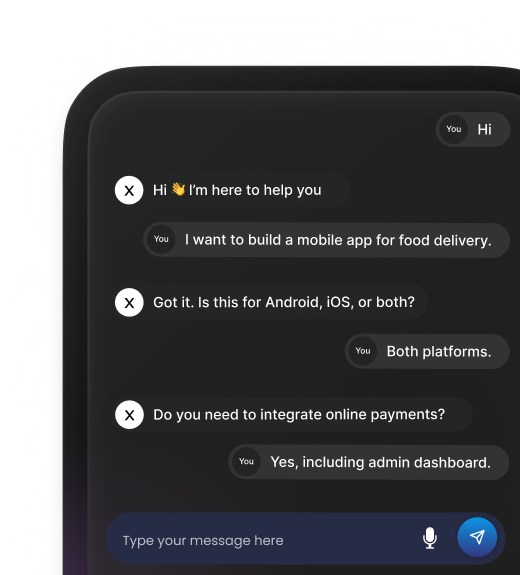
The Shift Towards AI Applications

Artificial intelligence is entering a new phase of growth. What once felt experimental is now practical, embedded, and increasingly essential to how businesses operate. For years, the focus was on building AI infrastructure: powerful chips, cloud platforms, large models, and massive computing capacity. That investment laid the groundwork for today’s innovation. However, the center of value is shifting.
Businesses are no longer satisfied with simply having access to AI technology. They want results. They want tools that increase efficiency, improve customer experience, reduce costs, and support better decision-making. As a result, AI applications not infrastructure are becoming the true engines of growth.
Infrastructure remains important, but it operates mostly behind the scenes. It enables performance, scale, and reliability. Applications, on the other hand, are where real impact happens. They directly interact with users, solve tangible problems, and integrate into daily workflows. This is where businesses see measurable return on investment.
One of the clearest signs of maturity in the AI market is the rise of revenue-generating AI products. Many AI tools are no longer prototypes or experimental add-ons. They are stable solutions with recurring customers and growing adoption across industries. Investors are increasingly focused on companies delivering practical outcomes rather than abstract technological potential.
Department-level AI tools are leading the way. Coding assistants, workflow automation platforms, research summarization tools, and productivity enhancers are becoming part of everyday work environments. Rather than replacing employees, these systems amplify their capabilities. Teams that effectively integrate AI are often more productive, faster, and more competitive.
At the same time, competition in the enterprise AI space is intensifying. Model providers and application developers are racing to differentiate themselves through performance, specialization, and workflow integration. What is becoming clear is that applications drive demand for infrastructure. Businesses choose solutions based on usefulness not on which model runs in the background.
Another powerful trend is the growth of industry-specific AI. Solutions tailored to healthcare, legal services, finance, manufacturing, and enterprise operations are gaining traction. Because these tools are deeply embedded into workflows, switching costs are higher and long-term value is stronger.
The future of AI will likely resemble the evolution of the internet. Infrastructure enables progress, but applications create value. As AI adoption accelerates, the companies building practical, revenue-generating solutions will define the next stage of the technology revolution.
Related articles
Contact us

Leave us basic information about a project and we will get back to you with answer
Need instant answers?
Our AI assistant is available 24/7 to answer questions on pricing, timelines, and project scope.
Click Here